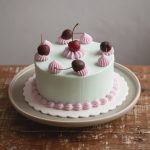
“This meeting of the Longborough Women’s Institute will now come to order.” Lady Elrington’s imposing voice quelled the chatter of a dozen ladies. Only Mrs. Lundy could be heard saying “and those ducks were vicious, my dear” before she too lapsed into attentive silence.
“First order of business — the annual bake-sale fundraiser.”
Edith Langford listened to the president hand out baking assignments with some trepidation. It was her first-ever WI meeting, and she wanted to make a good impression. But unless they needed charred lumpy biscuits, that wasn’t likely to happen.
Next to her sat a very reluctant-looking Miss Mallowby. Such was the power of Lady Elrington, that even the village solicitor could not refuse to help out.
“Everyone’s so skilled, it’s intimidating,” Edith whispered to Miss Mallowby.
“The ladies get quite competitive,” she whispered back. “We call it the great Longborough bake-off.”
Edith giggled, then caught Lady Elrington’s stern eye.
“Miss Langford and Miss Mallowby,” said the lady in a tone that caused them both to sit up straighter. “You can be in charge of the decorations.”
Miss Mallowby breathed a sigh of relief. Edith wished she could do the same. There would be bunting involved, and her sewing was nearly as dismal as her baking.
“Madam President…”
A middle-aged woman in black raised her hand, and Edith noticed the other ladies shifting uncomfortably and glancing at each other.
“Yes, Mildred?”
“You didn’t give me an assignment…” The woman’s voice trailed off uncertainly.
“I thought that in the current circumstances we shouldn’t impose on you,” Lady Elrington said smoothly. “I’m sure you have other matters on your mind.”
Mildred nodded silently and the meeting resumed. But Edith noticed that the tense atmosphere remained.
“What was that all about?” she asked Miss Mallowby when the meeting adjourned.
The solicitor shook her head.
“Village gossip,” she said bitterly. “Mrs. Parsons’ husband died several weeks ago. Some sort of accident involving rat poison in the kitchen — a stupid place to keep it, but people will do it. And now everyone acts like there’s a dark mystery surrounding his widow.”
“They suspect she poisoned him?” asked Edith, shocked.
“Exactly. They’re perfectly horrid to her, in the guise of being sympathetic.”
“How dreadful. I wonder what makes them think that?”
Miss Mallowby shrugged.
“How can one find out the truth when it’s all rumours and gossip?”
“Consult the expert, of course,” said Edith, making a beeline for Mrs. Lundy.
“Oh hello girls!” Mrs. Lundy beamed at them. “Have you got lots of decoration ideas for the sale? I always like a British flag myself, it lends an air of occasion, don’t you think? Though one must be careful not to get buttercream on it—”
“Quite.” Miss Mallowby cut her off. “We were wondering about what happened with Mrs. Parsons just now?”
“Poor Mildred! It’s so hard on her, because you see the inquest ruled that her poor husband’s death was an accident.”
“And that’s a bad thing?” asked Edith, confused.
“Oh my dear,” said Mrs. Lundy sadly. “People have such suspicious minds. It was a very strange thing, the way the poison got into the cake. And then it was so out of character for Mr. Parsons… One clearly feels that foul play was involved. And until someone is proven guilty…”
“No one can be proved innocent either,” concluded Edith.
“Exactly!” Mrs. Lundy nodded vigorously. “But the police didn’t find any clues, and even your nice detective chap had to admit it must have been an accident.”
“He’s not my—” began Edith, but Miss Mallowby was intent on the mystery.
“What exactly was out of character for Mr. Parsons?” she asked.
“I suppose I’d better tell you from the beginning.” Mrs. Lundy motioned them to follow her the short way to her cottage. “And with such a story as this, tea is definitely called for.”
Once they were settled with cups of tea and Mrs. Lundy’s cat Archibald curled up in Edith’s lap, their hostess explained:
“The night Mr. Parsons died, the ladies of the house were making a cake— Oh, I suppose I should explain who lives at Robin Cottage. There were John and Mildred Parsons, their daughter Vera — such a nice girl — and Peter Wysell, who I gather is soon to be engaged to Vera. He’s the son of old family friends and has been staying with the Parsons on his holidays from Oxford. Well, as I say, Mrs. Parsons and her daughter were making a cake, and Lucy was helping — that’s their maid — and Mrs. Parsons was trying a new recipe for the bake-sale. She usually goes with her classic Victoria sponge, but this time she was experimenting with Chantilly cream, if you can believe it—”
“But the poison?” asked Miss Mallowby somewhat desperately.
“Right, of course. The tin of poison was on a shelf right above where they were working. It was an old tin, and a bit cracked, and somehow a few granules got into the cake mixture. The whole family was sick, but poor Mr. Parsons died.”
Mrs. Lundy tutted sadly and fortified herself with a sip of tea.
“That seems fairly straightforward,” remarked Edith. “Why did the police suspect foul play?”
“For one thing, there were tensions in the household. Mr. Parsons was against Peter marrying Vera, as he’d gotten into some serious debts at Oxford. And there were other objections.” Mrs. Lundy paused delicately. “I gather Peter is somewhat of a ladies’ man. Several girls at Oxford were very distressed when he decided to marry Vera. And what with the debts and her father’s good income…”
“Peter’s motives could be less than pure?”
“Exactly. But there’s more to the story. You see, it wasn’t just young girls who had their heads turned by Peter Wysell.”
“Mrs. Parsons,” murmured Edith. “The eternal triangle…”
“Yes, and a veritable fool she made of herself, wearing too much makeup, always cooking Peter’s favourite dishes, and no one quite sure if he was encouraging her or if it was all her imagination. Not that Vera would ever hear of such a thing.”
“What about Vera herself?”
“The milkman says he heard her having a blazing row with her father that morning, about how she was free to marry whom she chose. Only she wasn’t, of course. She’s only nineteen.”
“So all three had a motive,” summed up Miss Mallowby. “And, I suppose, opportunity. In a busy kitchen, it would be easy to slip some poison into the cake mixture when no one was looking.”
“That’s just what everyone in the village is thinking.”
“Well it seems a hopeless business,” said Miss Mallowby. “Although I don’t see why the village suspects Mrs. Parsons particularly.”
“Ah,” said Mrs. Lundy. “Now we come to the crux of the matter. Mr. Parsons died because he had the biggest slice of cake, and a second helping too. Apparently Mrs. Parsons persuaded him, saying it was her new signature recipe. But he never ate dessert as a rule. It was his particular quirk that he had no sweet tooth at all. It was only at his wife’s insistence that he had so much cake.”
“Well!” Miss Mallowby frowned, mulling this over. “I think I’m becoming convinced of her guilt myself.”
“I still don’t believe it,” said Mrs. Lundy. “I’ve known Mildred Parsons for fifteen years. She loved her husband. If anything, it’s that wily young man we should be suspecting.”
“I rather favour Vera, actually,” said Edith. “Thwarted love is a feeling that runs deep.”
Miss Mallowby smiled.
“It seems we have each picked a suspect. I wonder which one of us is right?”
Edith set down her cup with decision.
“There’s only one way to find out. Ladies, shall we investigate?”
 Daria Writes